As an Amazon Associate I earn from qualifying purchases and sometimes recommend products from other sellers at no extra cost you. For more details see my disclosure policy and privacy policy.
Grilling on a budget usually gets treated as a list of tricks: buy in bulk, wait for a sale, stretch a cheap cut with a good marinade. Those all help, but the bigger lever is knowing which cuts are actually forgiving on a grill in the first place, so you are not fighting the meat while you are still learning the equipment.
This guide walks through which affordable cuts give a beginner room to make mistakes, which pricier ones are not worth buying yet, and exactly what to say to a butcher so you get the right thing without having to know all the technical names yourself.
🔥 Why Cheap Doesn’t Mean Difficult
The price of a cut has almost nothing to do with how hard it is to cook well. What actually determines difficulty is fat content and connective tissue, since both of those buy you a margin for error that a lean, expensive cut simply does not have.
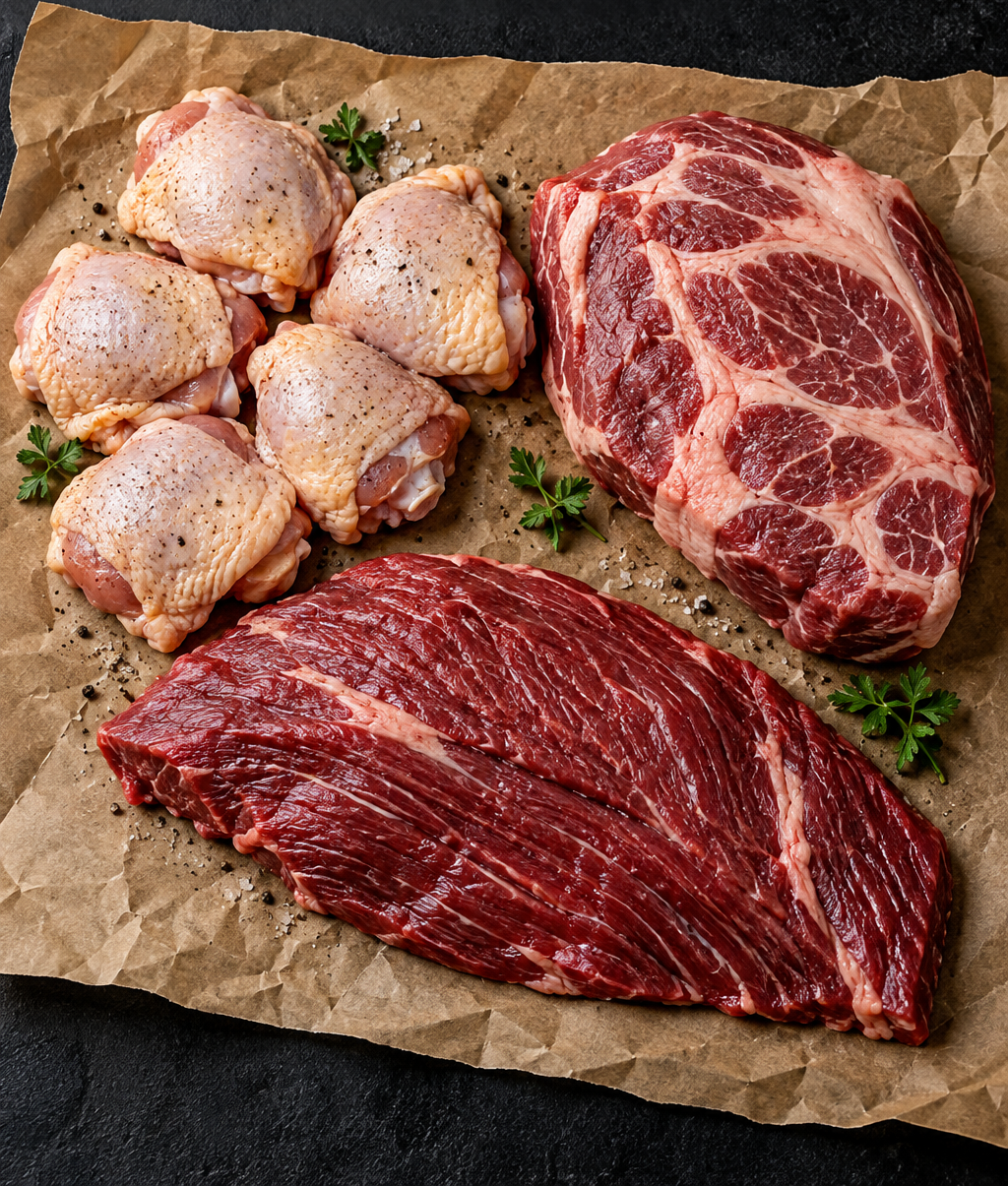
A well-marbled, cheaper cut like a pork shoulder or chicken thigh stays juicy across a wider range of cooking times, because the fat renders slowly and keeps basting the meat from the inside as it cooks. A pricey, lean cut like a filet has almost none of that built-in insurance, so a couple of minutes too long on the grill is the difference between perfect and overcooked.
That is genuinely good news for a beginner on a budget. The cuts that are easiest to learn on and the cuts that cost the least are frequently the same cuts. Compare a boneless, skinless chicken breast to a bone-in thigh: the breast costs more per pound in most stores, and it is far less forgiving on a hot grate, drying out fast if you look away for even a couple of minutes. The thigh costs less and gives you a much wider window to get it right.
The same logic holds true across almost every protein. Whatever you are grilling, look for visible marbling (the thin white streaks of fat running through the meat) or a reasonable fat cap on the edge, since that fat is what is buying you your margin for error.
🍗 Forgiving Cuts, Protein by Protein
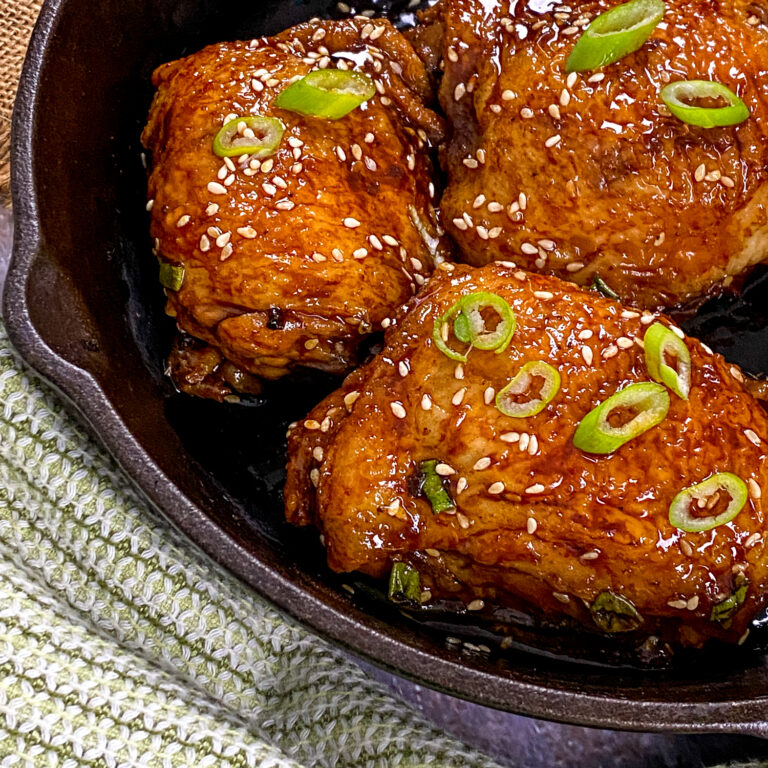
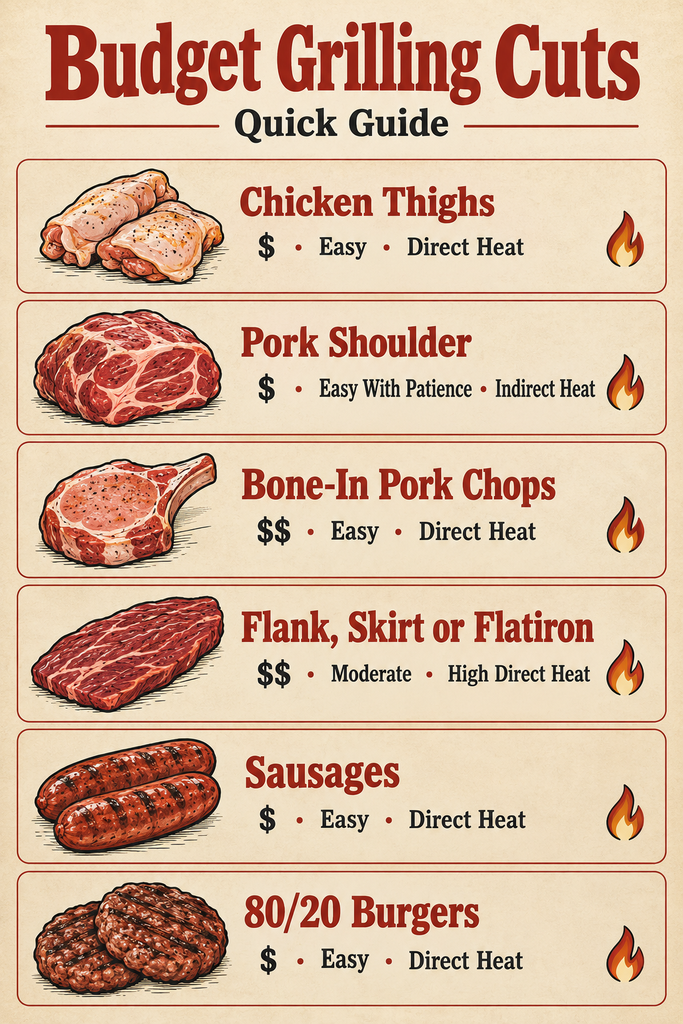
Chicken thighs are about as forgiving as grilling gets. Their higher fat content compared to chicken breast means a few extra minutes on the grill will not dry them out the way it would with a leaner cut, and they are one of the cheapest proteins in the meat case almost everywhere. Our grilled chicken thighs guide covers times and temperatures in more depth once you are ready to fine-tune your technique.
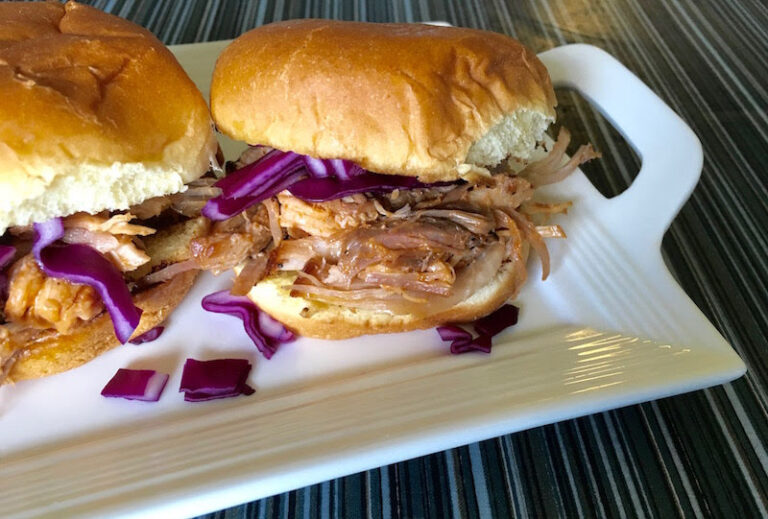
Pork shoulder (sometimes labeled “Boston butt”) is the classic budget cut for low-and-slow cooking, packed with connective tissue that breaks down into a tender, almost fall-apart texture over several hours. It is not a quick weeknight cut, but per pound it is one of the least expensive proteins you can buy, and it forgives a wide window of cook times. Our beginner’s guide to pulled pork walks through picking the cut and getting through the cook step by step.
Pork chops, specifically the bone-in variety, sit between the two extremes above: quicker to cook than a shoulder, but the bone helps regulate heat and adds a little insurance against overcooking compared to a boneless chop.
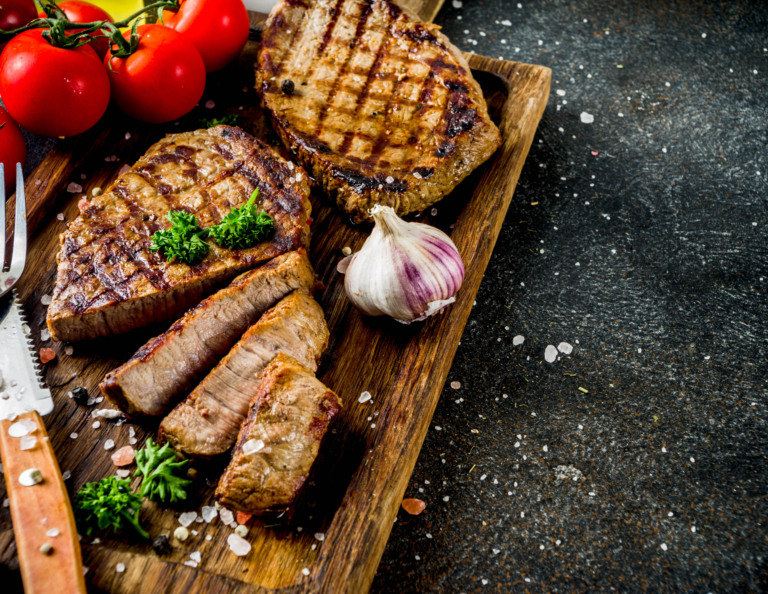
Flank, skirt, and flatiron steaks are the beef cuts worth learning first. All three come from harder-working muscles, which gives them real beefy flavor at a noticeably lower price than a ribeye or filet. The trade-off is that they need to be sliced thinly against the grain after cooking, and they are best kept to medium-rare or medium, since they can toughen quickly past that point. High, fast heat for a few minutes per side is the right approach for all three.
Sausages are about as beginner-proof as grilling gets, cheap, quick, and already seasoned, though it is worth learning to spot when the casing is about to split so you can pull them a minute earlier next time.
Burgers made from a reasonably fatty ground beef blend (80/20 is a common, forgiving ratio) are genuinely one of the most forgiving items you can put on a grill, and our guide to grilling the best burgers and seasoning blends that actually work are both worth a look if you want to build on the basics here. A cast iron smash burger press is a genuinely useful, inexpensive tool if you want a properly crisp, caramelized crust on a budget-friendly patty rather than a thick, pub-style burger.
⏱️ Grill-Fast vs. Low-and-Slow: Matching the Cut to the Method
Not every cut on this list cooks the same way, and matching the cut to the right method matters more than the specific temperature you land on.
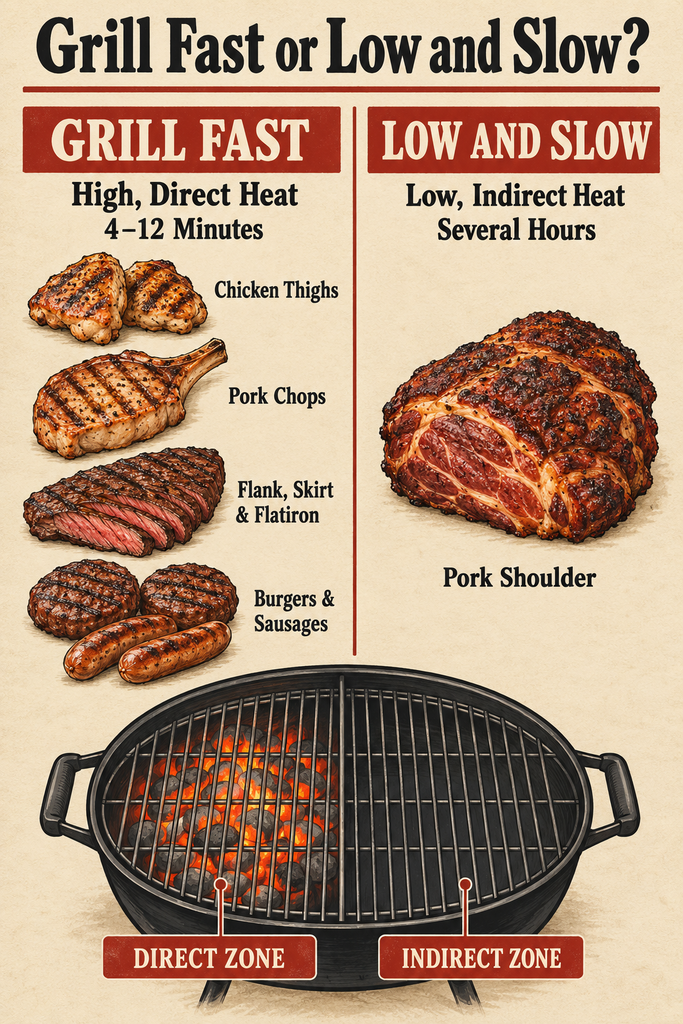
Grill-fast cuts (chicken thighs, pork chops, flank, skirt, flatiron, burgers, sausages) all want high, direct heat and a relatively short time on the grate, typically somewhere in the range of 4 to 12 minutes total depending on thickness. These are the cuts to reach for on a weeknight.
Low-and-slow cuts (pork shoulder being the main one on this list) want the opposite: lower, indirect heat for several hours, giving the connective tissue time to break down properly. Trying to rush a low-and-slow cut with high heat is one of the most common ways a beginner ends up with something tough rather than tender, since the tissue simply has not had time to render.
Rather than memorizing exact internal temperatures for every cut, our guide to the best meat thermometers for grilling is worth reading alongside this one, since a reliable thermometer takes the guesswork out of both methods far more effectively than watching the clock.
🚫 What to Skip For Now
Filet mignon, ribeye, and brisket are all worth learning eventually, but they are not where a beginner on a budget should start. Filet and ribeye are priced at a premium specifically because they are lean and tender without much technique required, which means the margin for error is small and the cost of a mistake is high. Brisket, meanwhile, is forgiving once you know what you are doing, but it demands hours of attention and a genuine feel for managing low, steady heat that is worth building on cheaper cuts first.
None of that is a permanent rule. It is simply more cost-effective to make your early mistakes on a five-dollar pack of chicken thighs than on a cut that costs several times as much.
⚖️ How Much to Buy Per Person
As a rough starting point, plan on about half a pound of raw, boneless meat per person for cuts like chicken thighs, pork chops, or steak, and closer to a third of a pound for something as rich as pork shoulder, since it loses a fair amount of weight to rendered fat during a long cook. Bone-in cuts need a bit more per person to account for the bone’s weight, so add another quarter pound or so if you are buying bone-in chops or thighs.
These numbers assume the meat is the main event alongside a couple of sides. If you are feeding a crowd that is also working through several side dishes, chips, and appetizers, you can trim these estimates down somewhat without anyone leaving hungry.
🚗 What This Looks Like in Practice
Say you are grilling for six people on a Saturday and want to keep costs down without serving the same thing every week. A family pack of bone-in chicken thighs, split and frozen into two smaller portions, covers this weekend and a second cookout later in the month. A pork shoulder bought on sale and started low-and-slow the night before turns into pulled pork with almost no active cooking time on the day itself. Either approach uses cuts from this list, costs meaningfully less than steak for the same crowd, and leaves plenty of room for a beginner to still be learning technique without also worrying about wasting an expensive cut.
🛒 Buying Smart
Family packs at the supermarket are almost always priced lower per pound than the same cut sold individually, and splitting a family pack into smaller portions the moment you get home is an easy way to bank the savings without committing to cooking it all in one sitting.
Butcher counter vs. supermarket case is less about price and more about flexibility. A butcher counter will usually cut a specific thickness or trim a cut to order at close to the same price as the pre-packaged version, and it is also the easiest place to ask questions if you are not sure what you are looking at.
What to actually say to a butcher: naming the cut and the cooking method together gets far better results than describing the dish you are planning. “I want a pork shoulder for a slow, low-heat cook” or “a chicken thigh, bone-in, for the grill” tells a butcher exactly what to hand you, where a vaguer request leaves more room for a mismatch.
Freezing portions is where a lot of the real savings show up over time. Split a bulk buy into meal-sized portions before freezing, press out as much air as possible, and label each one with the cut and the date, so a good sale translates into several future dinners instead of one large one.
❓ A Few Common Questions
Is a cheaper cut ever actually a bad deal? Occasionally. A cut that is priced low because it needs extensive trimming, or because it is mostly bone and connective tissue with very little usable meat, is not automatically a good buy just because the sticker price looks low. Judge cuts by cost per usable pound where you can, not just the number on the label.
Do I need different equipment for low-and-slow versus grill-fast cuts? Not necessarily. A standard charcoal or gas grill can handle both if you know how to set up two heat zones, direct heat on one side for grill-fast cuts and indirect heat on the other for anything low-and-slow. A dedicated smoker makes long cooks easier to manage, but it is not required to get started.
Can I mix cuts from this list in one cookout? Yes, and it is a genuinely good way to feed a crowd on a budget. Pair something long and mostly hands-off, like a pork shoulder started early, with something quick, like burgers or sausages, cooked to order once your guests actually arrive.
📋 Quick Reference Table
| Cut | Relative Cost | Cooking Method | Difficulty |
|---|---|---|---|
| Chicken thighs | $ | Grill-fast, direct heat | Easy |
| Pork shoulder | $ | Low-and-slow, indirect heat | Easy (patience required) |
| Bone-in pork chops | $$ | Grill-fast, direct heat | Easy |
| Flank / skirt / flatiron steak | $$ | Grill-fast, high heat, slice against grain | Moderate |
| Sausages | $ | Grill-fast, direct heat | Easy |
| Burgers (80/20 blend) | $ | Grill-fast, direct heat | Easy |
| Ribeye / filet | $$$ | Grill-fast, high heat | Easy technique, expensive mistake |
| Brisket | $$ | Low-and-slow, indirect heat, hours | Hard |
Whatever the season, this same buying logic holds up: these are genuinely evergreen cuts and techniques, just as useful for a quick autumn tailgate as for a summer cookout.