As an Amazon Associate I earn from qualifying purchases and sometimes recommend products from other sellers at no extra cost you. For more details see my disclosure policy and privacy policy.
Most burger problems start long before the grill gets hot. Dry, bland, or weirdly dense patties can almost always be traced back to one culprit: the seasoning step, or more accurately, how and when it’s done. Getting this right is simpler than you might think, and it makes more difference than swapping beef fat percentages or chasing a fancier grill.
This post covers everything you need: a reliable base blend, a smoky version, a spicy option, and an umami-forward approach for when you want something with more depth. You’ll also find the most common seasoning mistakes spelled out clearly so you can avoid them before they happen.
Why Seasoning Strategy Matters as Much as the Blend Itself
There’s a lot of advice out there that treats burger seasoning like a shopping list. Add this spice, add that one, and you’re done. But two cooks can use identical ingredients and end up with completely different results based on one variable: timing.
Salt is the main character here. When it comes into contact with raw ground beef, it starts pulling moisture out of the meat and breaking down the proteins. Leave it long enough and those proteins begin to bind together the same way they do in a sausage or meatloaf, which means your burger will be firm, dense, and chewy instead of juicy and tender. The fix is straightforward: form your patties first, season the outside just before they go on the grill, and resist the urge to prep them too far ahead.
Form First, Season Last
The rule that changes everything for most people is this: form your patties, then season them. Don’t season loose ground beef and then shape it. Sprinkling the outside of a formed patty right before grilling keeps the interior open and tender while still giving you a well-seasoned exterior that develops a proper crust on the grill.
If you’re mixing seasoning into the meat, which works well for umami-heavy blends, do it immediately before cooking. Don’t mix and then refrigerate for a few hours. The moment salt hits the meat, the clock is ticking.
The Base Blend: Your Go-To for Any Burger Night
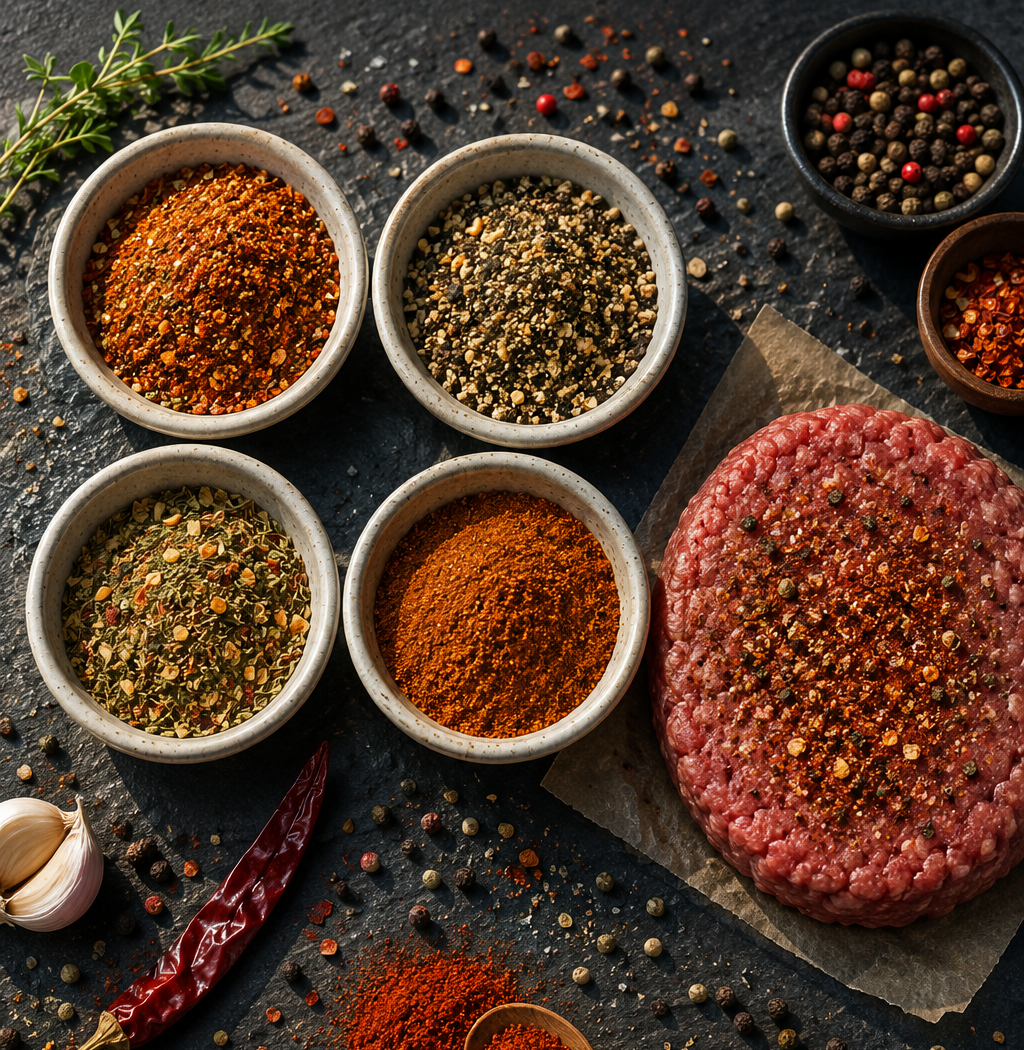
A classic burger doesn’t need a long ingredient list. The goal of a base blend is to amplify the beef, not compete with it. Five ingredients, all of which you likely already have, are enough to turn a good patty into a great one.
The blend:
- 1 tsp sweet paprika
- ½ tsp garlic powder
- ½ tsp onion powder
- ¼ tsp freshly ground black pepper
- ½ tsp kosher salt
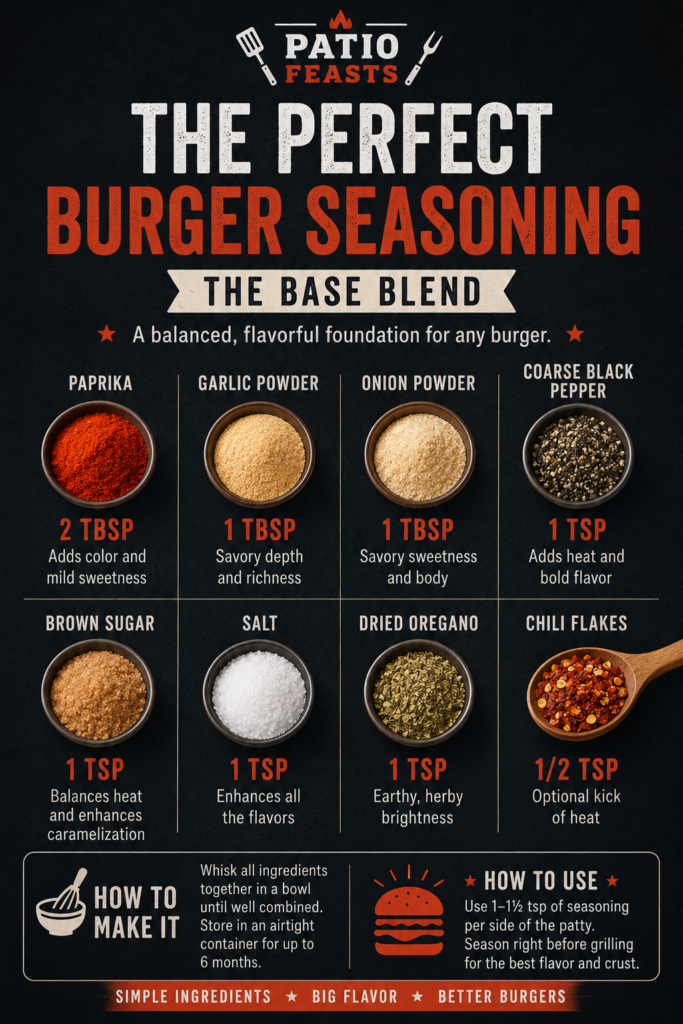
Mix it all together and store it in a small jar. When it’s time to grill, sprinkle roughly ¼ to ½ teaspoon per side of each patty right before they go on. You want to see a light, even coat, not a thick crust of dry spice. This blend works on beef, turkey, and veggie patties alike, so if you’ve got Spicy Black Bean BBQ Veggie Burgers on the menu too, you can season those the same way.
A Small Pinch of Brown Sugar
Some cooks add a small amount of brown sugar to their base blend, and it’s worth trying. The sugar helps with browning, encouraging that slightly caramelised, BBQ-adjacent crust that makes a burger look as good as it tastes. Keep the amount modest, though. Too much and it can burn before the patty is cooked through, especially at high heat.
The Smoky Blend: Gas Grill? No Problem
If you’re cooking on a gas grill and missing that deep, charcoal-smoked flavour, smoked paprika is your shortcut. It won’t replicate a full day of smoking, but it adds genuine warmth and depth that reads as smoky rather than just spiced. This is a small tweak to the base blend that pays off every time.
The blend:
- 1 tsp sweet paprika
- ½ tsp smoked paprika
- ½ tsp garlic powder
- ½ tsp onion powder
- ¼ tsp black pepper
- ⅛ tsp cayenne
- ½ tsp kosher salt
The combination of sweet and smoked paprika is worth noting. The sweet paprika handles colour and mild fruitiness; the smoked paprika does the heavy lifting on flavour. Using only smoked paprika can sometimes tip into slightly bitter territory, so the balance between the two works better than going all in on one.
Apply the same way as the base blend: about ¼ to ½ teaspoon per side, right before grilling. This smoky version pairs especially well with sharper toppings like blue cheese or pickled jalapeños. If you want a finished recipe to try it with, the Grilled Burgers with Blue Cheese and Avocado on the site are a great starting point.
The Spicy Blend: Heat That Builds, Not Bites
A spicy burger doesn’t have to be novelty-level hot. A well-made spicy blend has layers: warmth that builds across a few bites rather than heat that overwhelms the first one. The key is using cayenne (or chili powder) as part of a larger seasoning rather than just dumping it on top of a regular blend.
The blend:
- 1 tsp paprika
- 1 tsp kosher salt
- 1 tsp black pepper
- ½ tsp brown sugar
- ½ tsp garlic powder
- ½ tsp onion powder
- ¼ tsp cayenne (or more, to taste)
The brown sugar in this blend has the same browning benefit as before, but it also softens the initial hit of heat slightly, letting the spice build more gradually. If you’re loading these burgers up with jalapeños or hot sauce, pull back the cayenne a little. If the toppings are mild, let it loose.
For guidance on getting the cook right once you’ve got your seasoning sorted, the post on How Long to Grill Burgers: Times & Temperatures for Every Doneness Level covers everything from rare to well done.
The Umami Blend: For the “Pub Burger” Effect
This is a different category from the others. Where the blends above are dry rubs applied to the outside, umami-forward seasoning usually goes into the meat itself. The ingredients at play, things like fish sauce, Worcestershire sauce, soy sauce, and miso, are liquids that need to be worked through the ground beef before the patties are shaped.
The result is a burger with noticeably more depth and savouriness. It’s richer, slightly more complex, and has a texture that’s somewhere between a classic grilled patty and a well-seasoned meatball. It’s worth trying if you want something different from the weeknight standard.
Two Ways to Do It
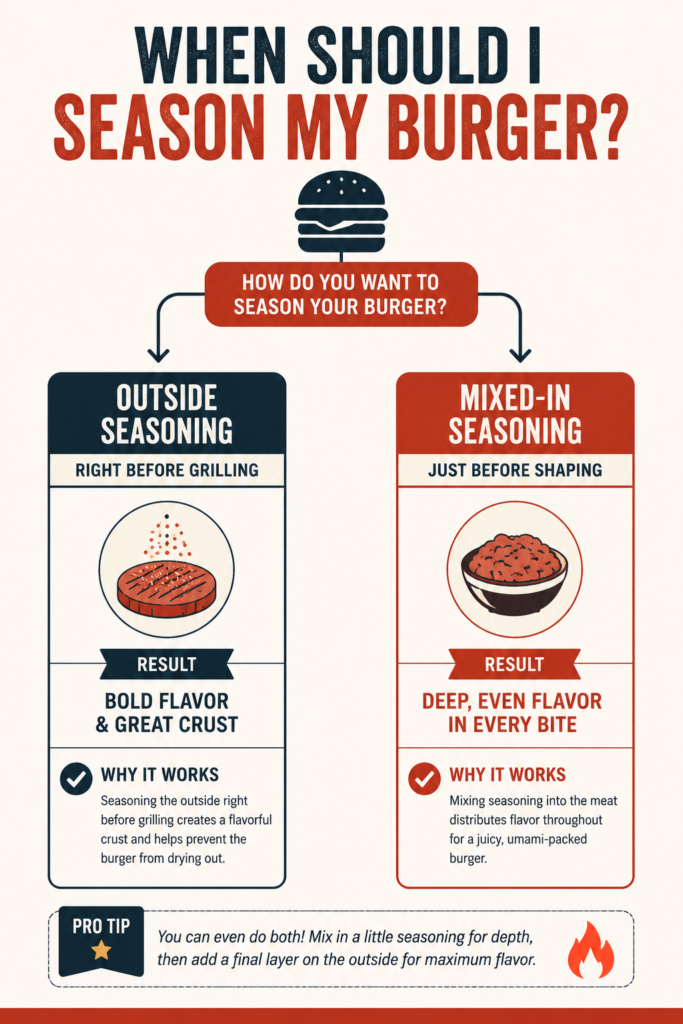
Into the meat: For every pound of ground beef, add about 1 teaspoon of fish sauce, a pinch of garlic powder, and a little black pepper. Mix briefly with your hands, just enough to distribute, then form patties immediately and grill. Don’t let it sit. The same caution about over-mixing applies here even more than usual: the liquid loosens the proteins and makes it easier to overwork the meat without realising it.
As a sauce: Mix ketchup with a small amount of Worcestershire sauce, fish sauce, a tiny bit of soy sauce, and a pinch of sugar. Half of this can be stirred into the meat before shaping; the other half becomes your burger sauce. It’s a shortcut that adds umami without requiring you to track down miso, and the sauce doubles as a topping that ties the whole burger together.
The Common Mistakes That Undo Good Seasoning
You can have a perfect blend and still end up with a bad burger. These are the mistakes worth knowing before you light the grill.
- Seasoning too early. If you salt your patties and let them sit in the fridge for an hour, you’re essentially making a sausage. Season right before grilling, not while you’re still putting together toppings or preheating.
- Overworking the meat. Ground beef compacts quickly. Mix only until the seasoning is just distributed and stop as soon as the patty holds together. The less you handle it, the more tender the result.
- Using too much seasoning. An even, light coat is what you want. Excess seasoning doesn’t stick to the patty anyway, it falls off into the grill or burns. Aim for visible coverage, not a thick crust.
- Pressing the patties while cooking. This is technically a cooking mistake, not a seasoning one, but it’s closely related. Pressing flattens the patty and squeezes out the moisture you just worked to preserve. Put them down, leave them alone, and flip once.
- Skipping the dimple. Before your patties go on the grill, press a small indent in the centre of each one with your thumb. Burgers puff up in the middle as they cook, and this prevents them from turning into a ball shape that doesn’t cook evenly.
A good seasoning job and a rested, gently handled patty are what separate a memorable burger from a forgettable one. If you want to understand the full process from start to finish, How to Grill the Best Burgers: Tips & Recipes walks through everything from patty formation to resting time. And once they’re off the grill, the guide to how to keep burgers warm and moist after grilling is worth reading if you’re feeding a crowd and cooking in batches.
Choosing the Right Blend for the Occasion
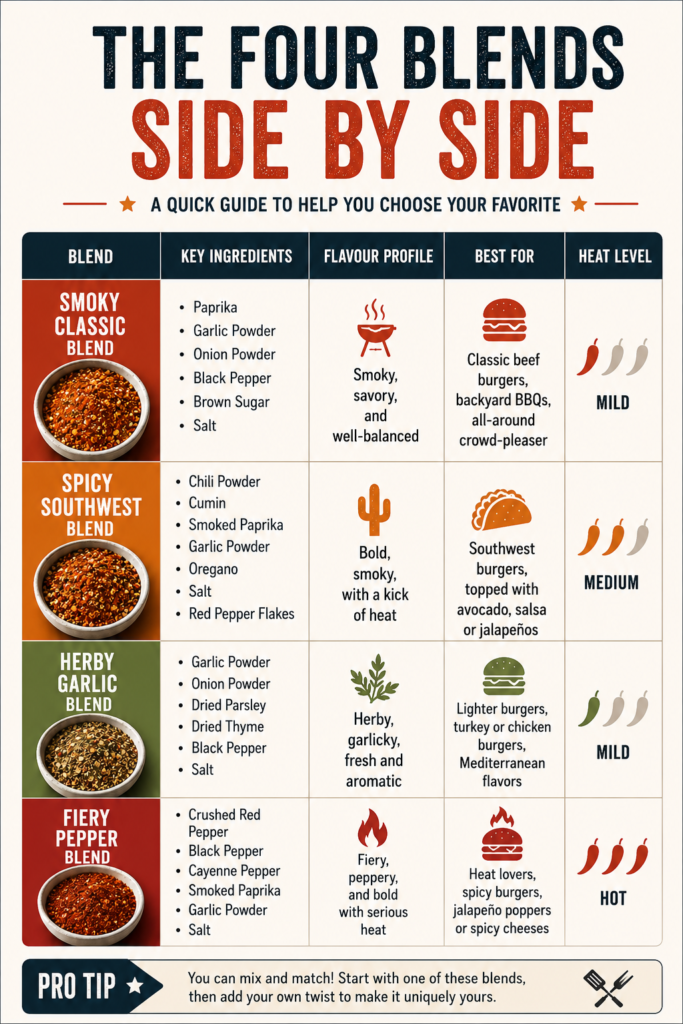
Not every burger night calls for the same approach. Here’s a simple way to think about which blend to reach for:
- Weeknight grilling: Base blend. Fast, reliable, crowd-pleasing.
- Gas grill, want BBQ vibes: Smoky blend. Smoked paprika does the work.
- Spice lovers at the table: Spicy blend. Adjust cayenne to the crowd.
- Want something different: Umami blend, mixed into the meat.
- Feeding vegetarians too: Base or smoky blend work on veggie patties and are just as effective on Spicy Black Bean BBQ Veggie Burgers as they are on beef.
If you’re cooking for a group with mixed tastes, make a double batch of the base blend and a smaller batch of the spicy version. Season most patties with the base blend and let the heat-lovers add a pinch of extra cayenne to their own. Simple, practical, no arguments.
Keeping Your Blends Fresh
Homemade dry seasoning blends last well if stored properly. Mix them in bulk, store them in a small airtight jar, and keep them away from heat and light. Most ground spices stay potent for around six months before flavour starts to fade. Label the jar with the date so you’re not guessing.
One practical tip: mix enough for about four to six burger sessions at once. That way you’ve always got it ready without constantly remeasuring. If you grill regularly through summer, you’ll use it up well before freshness becomes a concern.
Getting the Most Out of Simple Seasoning
Burger seasoning doesn’t need to be complicated. A good base blend, applied generously to formed patties right before they go on the grill, will outperform an elaborate mix that was added too early or worked into overhandled meat. Start simple, nail the timing, and then experiment with the smoky, spicy, and umami variations as you get comfortable.
The four blends in this post cover the full range of what most grilling sessions call for. Once you’ve made them a few times, adjusting heat levels, switching out spices, and building your own house blend becomes second nature. Season confidently, handle the meat gently, and the grill will do the rest.
Continue Your Journey
- How to Grill the Best Burgers: Tips & Recipes – Covers patty formation, heat management, and everything between seasoning and serving
- How Long to Grill Burgers: Times & Temperatures for Every Doneness Level – Takes the guesswork out of doneness from rare through well done
- How to keep burgers warm and moist after grilling: A Comprehensive Guide – Essential if you’re grilling in batches for a crowd
- Grilled Burgers with Blue Cheese and Avocado – A great recipe to put the smoky blend to work
- Spicy Black Bean BBQ Veggie Burgers – The base and smoky blends work brilliantly on these too
What’s your go-to burger seasoning? Do you keep it simple or have a secret ingredient in the mix? Drop it in the comments below.
If you want more grilling guides, seasonal recipes, and patio cooking ideas delivered straight to your inbox, sign up for the Patio Feasts newsletter.