As an Amazon Associate I earn from qualifying purchases and sometimes recommend products from other sellers at no extra cost you. For more details see my disclosure policy and privacy policy.
Walk down the BBQ sauce aisle at any grocery store and you’ll quickly realize there’s no such thing as one “best BBQ sauce.” There’s a bottle for every backyard cook, every cut of meat, and every regional loyalty — and knowing which style fits your cook is what separates a great rack of ribs from a forgettable one.
This guide breaks down the four major American BBQ sauce styles, explains what makes each one distinct, and points you toward the bottles worth grabbing for your next cookout. Whether you’re mopping a pork shoulder, glazing chicken thighs, or finishing a brisket, you’ll know exactly which sauce to reach for.
Why BBQ Sauce Style Actually Matters
It’s tempting to just grab whatever’s on sale and call it a day, but using the wrong sauce for the wrong job can genuinely undercut your cook. A thick, sweet Kansas City glaze is wonderful on ribs, but put it on a delicate piece of pulled pork and it can overwhelm the meat. A sharp Carolina vinegar sauce might seem plain on its own, but the moment it hits slow-cooked pork, something almost magical happens.
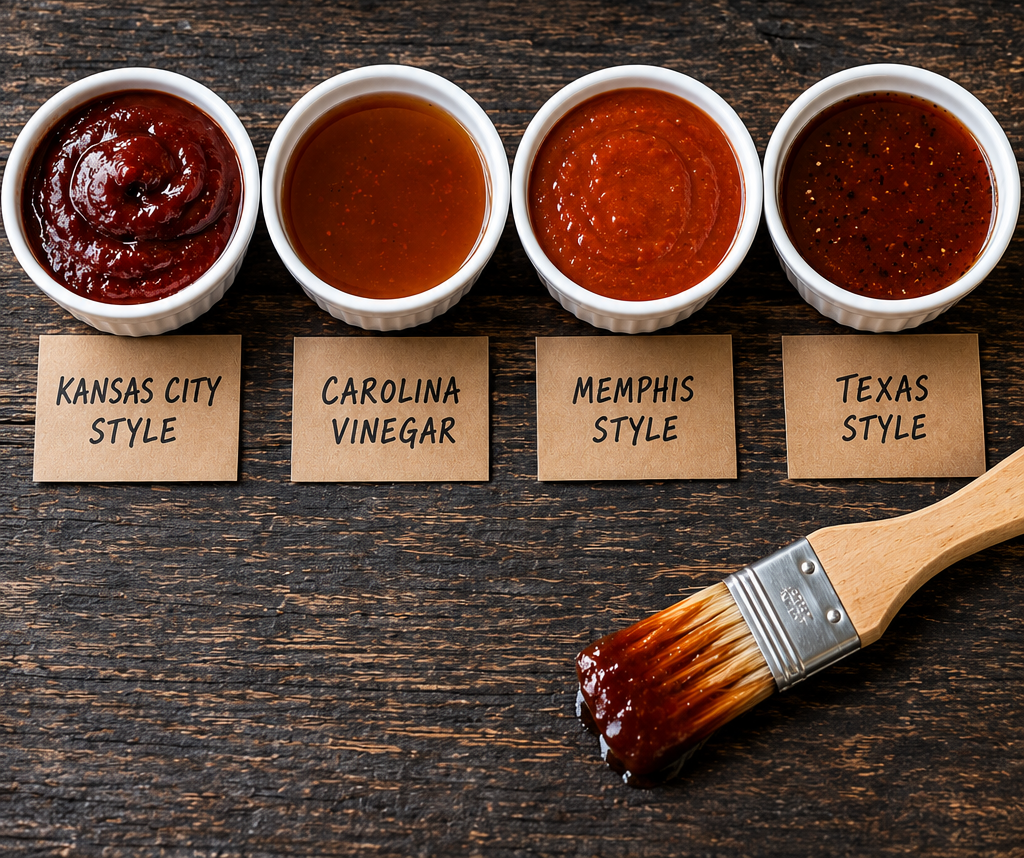
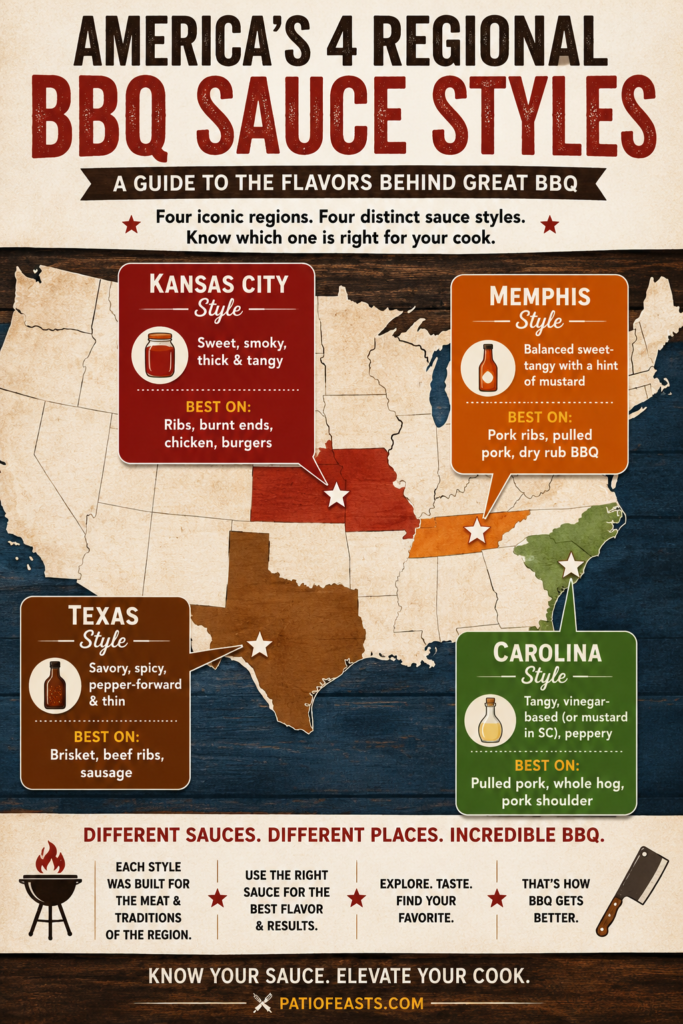
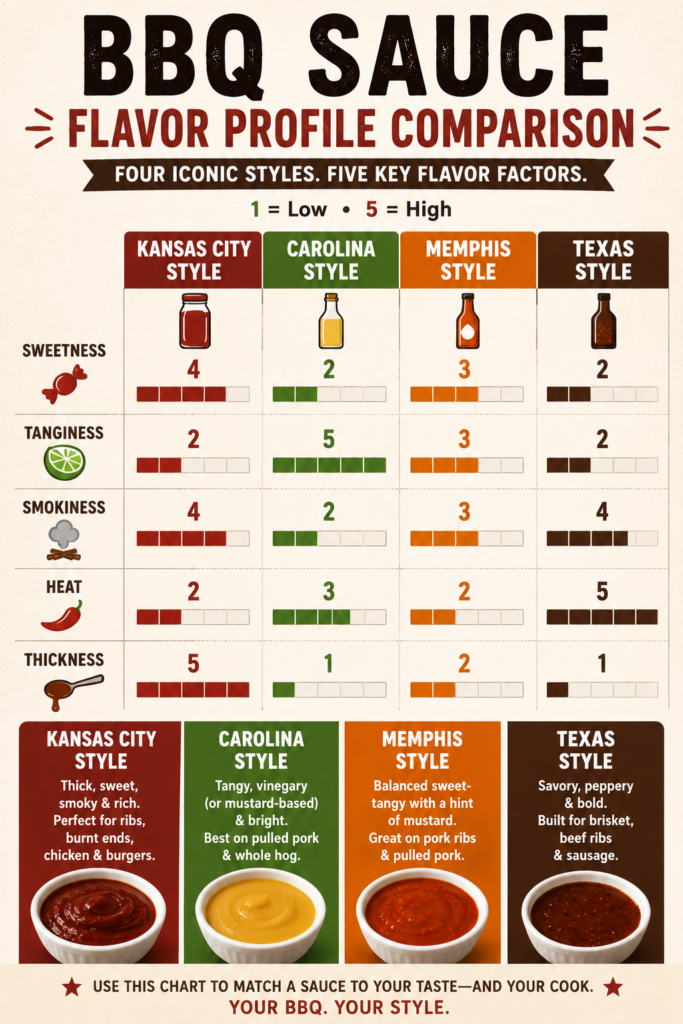
The four regional styles — Kansas City, Carolina, Memphis, and Texas — all developed around the meats local pitmasters were cooking. That history is part of why each style works so well in its natural context. Once you understand the logic behind each one, you’ll instinctively know which bottle to open before you even fire up the grill.
The Four Regional BBQ Sauce Styles at a Glance
Best Kansas City BBQ Sauce
Kansas City sauce is what most Americans picture when they hear “barbecue sauce”: thick, tomato-based, sweet, and just smoky enough to feel like summer. It’s built on a foundation of ketchup, brown sugar or molasses, and a touch of vinegar, with liquid smoke often adding that characteristic aroma. This is the style that became the national supermarket default, and for good reason — it’s versatile, crowd-pleasing, and works on almost anything.
The texture is what really sets KC sauce apart. It clings to ribs and chicken in a way thinner sauces can’t match, which makes it perfect for applying during the last few minutes on the grill for a sticky, caramelized finish. If you’ve ever had burnt ends, that glistening sweet glaze is almost always Kansas City in spirit, if not by name.
Best Bottles to Buy
Sweet Baby Ray’s Original Barbecue Sauce is arguably the most recognized KC-style sauce on supermarket shelves, and it earned that spot. It’s balanced, affordable, and consistently delivers that sweet, smoky flavor profile without being cloying. It’s a dependable all-rounder for everyday grilling.
Joe’s Kansas City Original Bar-B-Que Sauce is worth seeking out if you want the real deal from a proper Kansas City restaurant lineage. It’s thicker and smokier than Sweet Baby Ray’s, with a depth of flavor that holds up beautifully on beef ribs and burnt ends. You’ll likely find it at specialty grocery stores or online.
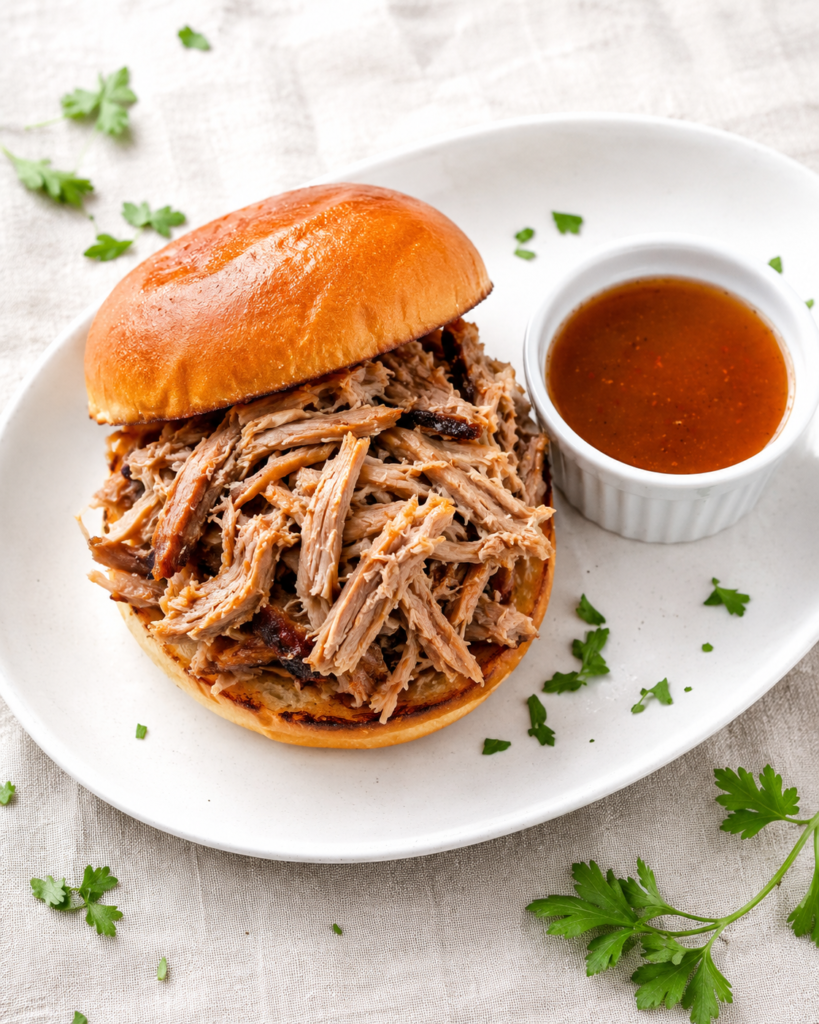
If you’re cooking pulled BBQ pork sliders for a crowd, a Kansas City sauce works brilliantly as a finishing glaze — brush it on just before serving for that sticky, glossy look.
Best Carolina BBQ Sauce
Carolina sauce isn’t really a single sauce — it’s a whole family of them, and they differ more dramatically from each other than you might expect. Eastern North Carolina leans on a thin, almost water-like sauce made from cider vinegar, salt, and red pepper flakes. It’s used as a mop during cooking and a finishing splash at the table, and it’s polarizing for a reason: it tastes almost nothing like what most people think of as BBQ sauce, yet it transforms slow-cooked pork in a way that’s hard to describe until you’ve tried it.
Lexington-style (Western NC) sauce softens that sharp vinegar base with a little ketchup and sugar, giving it more body and a touch of sweetness. South Carolina goes in an entirely different direction with its mustard-based “Carolina Gold” — a blend of yellow mustard, cider vinegar, and brown sugar that’s tangy, sweet, and distinctly its own thing.
Best Bottles to Buy
Lillie’s Q Carolina Barbecue Sauce hits the Western Carolina sweet spot well — thin enough to mop, rich enough to use as a finishing sauce, with that vinegar-and-tomato backbone that makes pulled pork sing. It’s one of the more widely available Carolina-style options outside the Southeast.
For mustard sauce, look for any bottle labeled “Carolina Gold” that lists yellow mustard, cider vinegar, and brown sugar as lead ingredients. The golden color and tanginess are what you’re after. This style is exceptional on spicy black bean BBQ veggie burgers — the mustard tang cuts right through the richness of the bean patty.
If you like sharp and tangy over sweet and smoky, Carolina is your style. Don’t be put off by how thin the vinegar versions look in the bottle — thinness is the point.
Best Memphis BBQ Sauce
Memphis sits comfortably between the sweetness of Kansas City and the sharpness of Carolina, which makes it one of the most approachable regional styles for people who are just starting to explore beyond the supermarket standard. It’s tomato-based like KC, but more vinegar and some mustard bring the sweetness back down to earth. The result is a sauce that tastes bright and balanced rather than sugary.
One thing Memphis is famous for, though, is the dry rub. Memphis pitmasters often skip the sauce entirely during cooking, applying a spice rub and letting the meat carry the flavor on its own. Sauce comes on the side for dipping. If you’re the kind of cook who takes their burger seasoning seriously and thinks the rub should do most of the work, you’ll appreciate this philosophy.
Best Bottles to Buy
True Memphis-branded supermarket sauces are rarer than KC or Texas labels, but they do exist. Look for bottles explicitly labeled “Memphis style” that list ketchup, apple cider vinegar, brown sugar, and mustard in the first few ingredients — that mirrors the flavor profile closely. Thinner consistency is a good sign; if it looks like it would paint a wall, it’s probably closer to Kansas City.
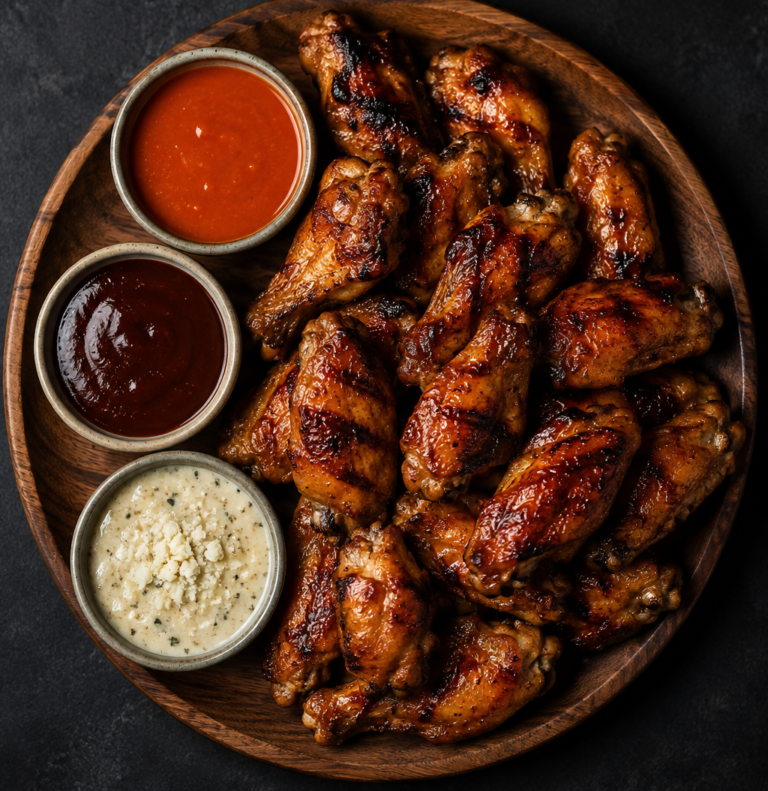
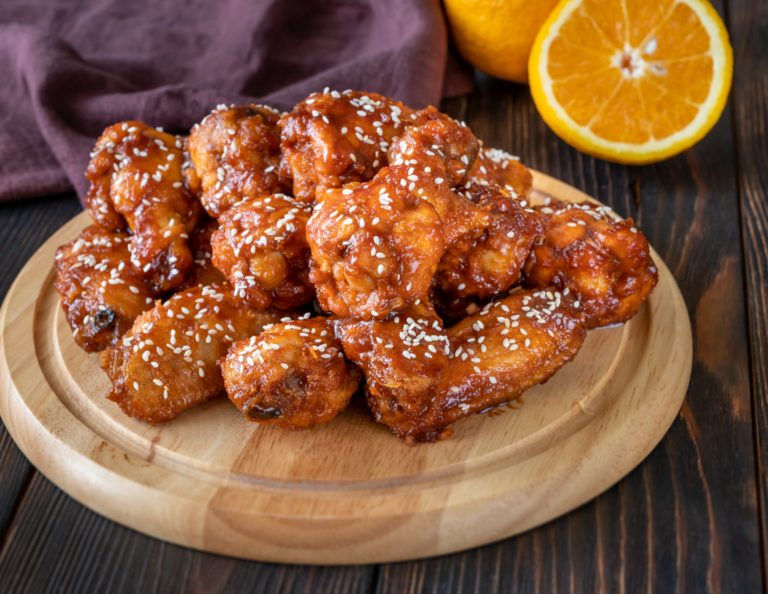
Well-known Memphis BBQ restaurants also bottle their own sauces and sell them online, often in original and spicy versions. If you spot a restaurant-sourced Memphis sauce, it’s worth grabbing — the real thing is hard to replicate in a mass-produced bottle. Memphis sauce works particularly well on best chicken wing marinade for grilling applications, where you want flavor complexity without heavy sweetness.
Best Texas BBQ Sauce
In Texas, the meat is the main event. Brisket, beef ribs, and sausage are cooked low and slow until the smoke does all the talking, and sauce — if it appears at all — comes on the side in a small cup. Texas sauces are thinner and more peppery than anything else on this list, built around tomato as a base with bold additions of black pepper, chili powder, cumin, garlic, hot sauce, and Worcestershire. Sometimes beef drippings go in, which adds a savory richness that you simply can’t fake.
This is the sauce for people who find Kansas City too sweet and want something that tastes like it belongs alongside beef. It’s not trying to be a glaze — it’s a condiment, and a bold one at that.
Best Bottles to Buy
Stubb’s Original is the most widely available Texas-style sauce and it’s consistently recommended by cooks who know their regional styles. It leans tangy and peppery rather than sweet and thick, and it holds up well next to beef without competing with the smoke. The spicy version is worth trying if you like heat.
Beyond Stubb’s, look for any bottle marketed as “Texas-style” that features chili powder, black pepper, and cumin prominently in the ingredient list. Thinner texture is a good indicator you’re in the right territory. Texas sauce genuinely elevates a simple grilled balsamic sirloin steak when served alongside rather than on top — the pepper-forward profile complements beef without overpowering it.
How to Choose the Right Sauce for Your Cook
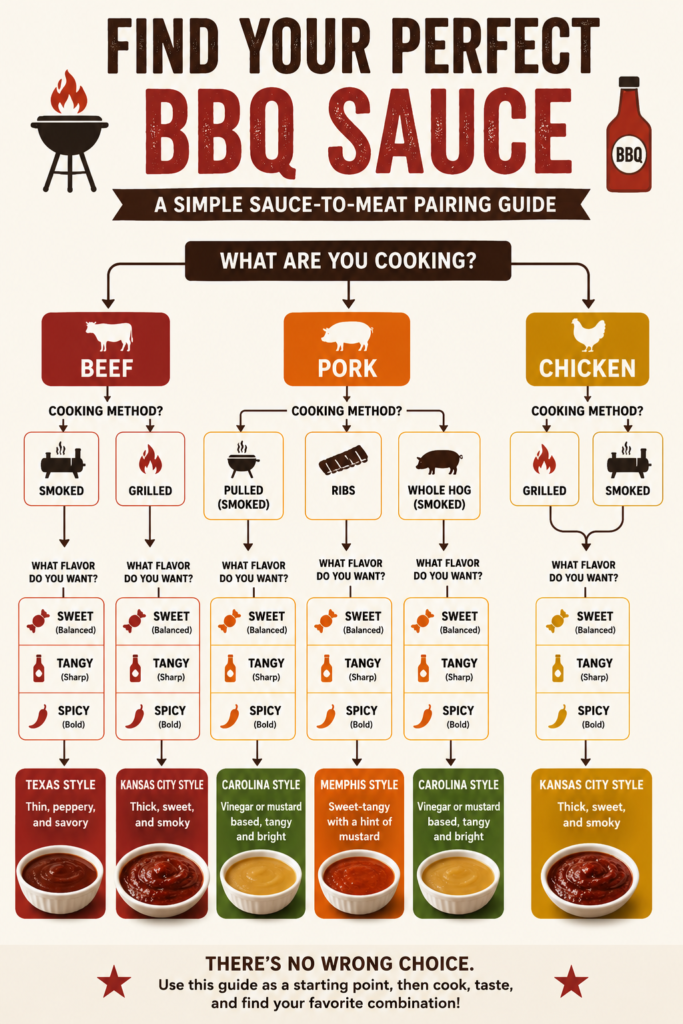
Now that you know the styles, picking the right bottle becomes a lot more intuitive. A few simple rules:
- Sweet tooth and serving a crowd? Go Kansas City. It’s universally liked and forgiving on almost any protein.
- Cooking pork low and slow? Carolina vinegar sauce. Trust the process — it works.
- Running a dry rub setup? Memphis on the side gives you flavor without drowning the bark.
- Smoking beef? Texas, without question. Stubb’s and a side cup is all you need.
You can also use regional sauces as a starting point and adjust them at home. A squeeze of honey into a Texas sauce, a splash of hot sauce into a KC bottle, or a little extra vinegar into a Memphis label can quickly dial in exactly the flavor you’re after. Most bottled sauces are designed to be tweaked.
For bigger gatherings, it’s worth putting out two or three styles and letting guests choose. The Kansas City and Carolina pairing is particularly fun — they couldn’t be more different, and watching people figure out which camp they fall into is half the entertainment. If you’re planning a larger cook, the Fourth of July BBQ menu guide has practical advice on quantities and planning that pairs well with this kind of multi-sauce setup.
Storing Your BBQ Sauce
Once opened, most commercial BBQ sauces will last three to six months in the refrigerator. The high vinegar and sugar content in most styles acts as a natural preservative, but quality does degrade over time, so it’s worth finishing bottles before they’ve been open too long. Always check the label for the manufacturer’s guidance.
Unopened bottles are generally shelf-stable for a year or more when stored in a cool, dry cupboard. If you buy in bulk during peak season or stock up online, keeping bottles out of direct sunlight will help preserve flavor. A thick Kansas City sauce will separate slightly in the fridge — just give the bottle a good shake before using.
Your BBQ Sauce Questions, Answered
Can I use BBQ sauce as a marinade? Yes, though with some caution. Sauces with high sugar content can burn quickly over direct heat, so they’re better suited as a finishing glaze applied in the last 5-10 minutes of cooking, or as a marinade for lower-temperature indirect cooking. Carolina vinegar sauces are naturally better for long marination because the lower sugar means less risk of burning.
Is store-bought BBQ sauce as good as homemade? For everyday cooking, a good bottle is genuinely competitive with homemade. The brands recommended in this guide have earned their reputations. That said, homemade sauce lets you control every variable and dial in your exact preference — it’s worth experimenting once you know which regional style you prefer.
Which BBQ sauce style is best for ribs? Kansas City is the classic choice for sticky, glazed ribs, but Memphis sauce served on the side alongside a well-seasoned dry rub is the approach many serious rib cooks prefer. It comes down to whether you want the sauce baked into the crust or used as a dipping element. Both approaches are worth trying if you follow the best BBQ ribs for beginners method.
Does BBQ sauce style vary by the type of wood used for smoking? Not directly, but there’s a natural pairing logic. The fruitier smoke from apple or cherry wood tends to complement the sweetness of Kansas City sauces. Hickory, which is bolder and more assertive, stands up well against the sharper Carolina styles. Texas cooks traditionally favor post oak, which is relatively neutral and lets the beef and pepper-forward sauce do the talking.
Can I mix regional BBQ sauce styles? Absolutely. Blending a Kansas City sauce with a mustard Carolina Gold creates a sweet-tangy hybrid that works beautifully on chicken. Adding a Texas sauce to a KC base cuts the sweetness and adds depth. Experimenting with blends at home is a low-stakes way to develop your own signature sauce without starting from scratch.
Which Style Will You Try First?
The best way to learn your BBQ sauce preferences is to cook the same thing twice with two different regional styles and taste them side by side. Pick a protein you cook regularly, grab a Kansas City and a Carolina bottle, and see which one speaks to you. Once you have a favorite, the other styles start making more sense in context.
Regional BBQ sauce styles aren’t just flavors — they’re cooking philosophies. Kansas City is about the glaze. Carolina is about the mop. Memphis is about the rub. Texas is about the beef. Getting familiar with all four makes you a more versatile cook, and a more interesting one at the cookout.
Want more grilling guides, sauce tips, and recipe ideas? Sign up for the Patio Feasts newsletter and get seasonal content delivered straight to your inbox.
Continue Reading
- Pulled BBQ Pork Sliders — a crowd-pleasing recipe that pairs beautifully with both Kansas City and Carolina sauces
- Best BBQ Ribs for Beginners — a simple method that works with any regional sauce style you prefer
- Best Chicken Wing Marinade for Grilling — technique-first guide to wings that pairs well with every style covered here
- How to Season Burgers for Grilling — because a great sauce deserves an equally great burger underneath it
- Spicy Black Bean BBQ Veggie Burgers — mustard Carolina Gold sauce is a natural match for this one